WARTIME & COMMUNITY HISTORY
The Polish Soldiers Who Made the Scottish Borders Their Home
From wartime training in Berwickshire to postwar settlement, explore the Polish soldiers whose lives became intertwined with the Scottish Borders.
This story begins with the Second World War, but it does not end with the fighting. From 1940 onwards, Polish soldiers arrived in Scotland after journeys shaped by invasion, defeat, escape and the determination to keep fighting. Some passed through the Borders on their way back to the battlefields of Europe. Others eventually made a life here.
Their presence survives in public memorials, family histories and one of the region's most unexpected landmarks: the Great Polish Map of Scotland at Eddleston. Behind those familiar reminders lies a much larger story about a country lost, an army rebuilt and the difficult transition from soldier to civilian.
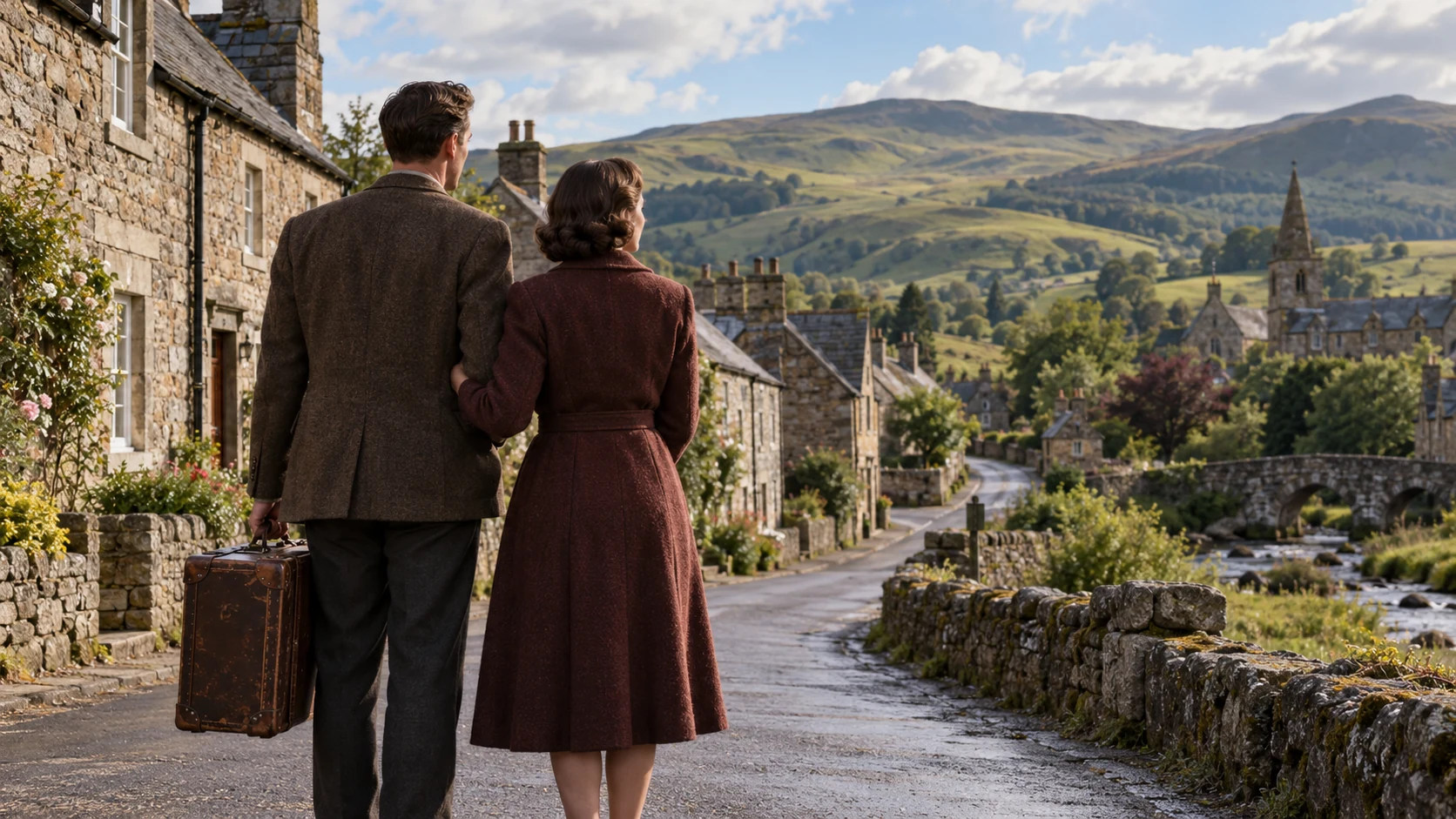
For a man arriving in Galashiels or Berwickshire during the war, the Borders could be somewhere temporarily safe without being home. A landscape of mills, farms and small towns offered a place to train, recover or wait for orders. Home might still mean a village hundreds of miles away, with relatives whose safety was uncertain.
After 1945, the question became more complicated. Victory over Germany did not restore Poland to the political independence its soldiers had fought for. For many, the road home remained dangerous or impossible. The temporary place where war had brought them could become the place where children were raised and old age was spent.
The Journey Did Not Begin in Scotland
Germany invaded Poland on 1 September 1939. The Soviet Union invaded from the east on 17 September. The country was divided between occupying powers, and its armed forces and government faced the problem of continuing the struggle beyond their own territory.
There was no single route from Poland to the Borders. Some servicemen escaped through other European countries and joined Polish forces in France. Others reached the West through different wartime journeys. Their experiences should not be compressed into one invented representative soldier.
The fall of France in 1940 brought another evacuation. Polish forces reached Britain and were reorganised to continue serving alongside the Allies. Scotland became central to that reorganisation, providing accommodation, training ground and a defensive role at a moment when invasion was a real fear.
For local residents, the arrival of Polish uniforms introduced people whose recent experiences could be hard to imagine. For the newcomers, familiar military routines existed alongside unfamiliar streets, language and weather. Neither group possessed the knowledge of how the war would end.
That lack of certainty belongs at the beginning of the account. These men did not arrive as a settled community following a completed migration plan. They arrived as an army whose country was occupied and whose future was bound to a war still unfolding.
Somewhere in Scotland
The 1st Polish Corps took responsibility for defending a stretch of Scotland's east coast in 1940. Its tasks included preparing positions and helping guard against a possible German landing. Scotland was a place of active wartime service, not simply a waiting room far from the conflict.
Secrecy affects the records left behind. Contemporary correspondence could describe a posting as somewhere in Scotland rather than identify its location. Later family research often has to reconnect that cautious language with camps, units and photographs.
The Scottish Borders formed part of the wider geography of Polish accommodation and training. It is important not to assign every Polish unit in Scotland to the region, or every man remembered locally to the same formation. Soldiers moved, organisations changed and different groups arrived at different times.
Our story The Scottish Borders During World War II places those movements alongside the region's other wartime roles. Polish service belongs within that history, rather than appearing only as an interesting addition to it.
To see a camp marked on a map is to see one point in a moving system. The men living there might have arrived from another Scottish camp and be preparing to leave again. The community remembered by one town could be temporarily present while another town encountered it months later.
Berwickshire Learns the Sound of Armoured Training
The 1st Polish Armoured Division was formed in 1942 under General Stanisław Maczek. Berwickshire became part of its training world, and Duns retains a particularly visible connection with Polish troops stationed in the area.
Armoured warfare required more than possession of tanks. Crews needed to learn how machines, weapons, communications and movement worked together. Training demanded space and repetition, making rural roads and open country part of a larger preparation for operations abroad.
From a civilian viewpoint, a military exercise could interrupt the ordinary use of a landscape. From the soldiers' viewpoint, it was preparation for dangers that would be encountered elsewhere. Those perspectives need not cancel one another.
The division later fought in the Normandy campaign, including the struggle around Falaise, and continued through north-west Europe. That combat history gives the earlier training a significance that was not fully visible to people watching vehicles pass through Borders country.
A man photographed locally beside a tank should not automatically be described as a veteran of a particular battle. Unit history establishes where a formation served; an individual's service record is needed to establish his own part in it. Keeping those scales separate is a simple way of respecting both history and the person within the photograph.
Duns: A Connection Written in Stone
A memorial at Duns records the connection between Polish troops and the County of Berwick, carrying the date 3 May 1943. It is evidence that the relationship was being expressed publicly while the war was still under way.
Such a memorial does something different from a later plaque looking back on the conflict. It belongs to the period when the future remained unknown. The people responsible were not commemorating a completed victory or a settled postwar community.
Duns has continued to remember the Polish presence, including through its relationship with Żagań in Poland. These later connections show how military history can become a continuing civic relationship rather than a closed chapter.
A visitor may notice a memorial without understanding the movements that brought the troops there. Reading the inscription alongside the history of training restores that context. The town was linked to a larger army preparing to liberate parts of Europe while still hoping that its own country would be freed.
Our film Scotland's Greatest War Memorial explores another expression of service and loss. The Duns connection adds the perspective of Allied men whose relationship with Scotland continued after the military purpose of their stay had ended.
Black Barony Becomes a Place of Military Learning
At Eddleston, the building now familiar as Barony Castle played an important Polish wartime role. From 1942, it housed the Polish Higher Military School, continuing staff-officer education that had been disrupted by the invasion of Poland.
The setting can seem surprising. A Borders country house and hotel does not resemble the conventional picture of a battlefield headquarters. Wartime necessity repeatedly adapted existing buildings to new purposes, however, and their earlier appearance did not prevent them from supporting military work.
Staff training involved the organisation and planning needed to make an army function. Remembering only marching soldiers and armoured vehicles would leave this less visible aspect of the war out of the landscape.
The building's Polish association also helps explain why its grounds later became home to the Great Polish Map of Scotland. The map was not a wartime operational device built for a secret invasion plan. It belongs to a much later period, even though wartime people and memories helped inspire it.
Separating those dates allows both stories to retain their meaning. A school supporting an army in the 1940s and an ambitious landscape model made in the 1970s are different undertakings linked by people, place and memory.
Victory and the Problem of Returning
In 1945, Germany's defeat ended the European war but did not resolve the future of Poland's forces in the West. A Soviet-backed government took power in Poland, while the government-in-exile and many servicemen rejected the political outcome.
For some soldiers, returning meant risking suspicion or persecution because of their service and political associations. For others, the place they remembered as home had been transformed by war or border changes. Families could be scattered or missing, and information remained uncertain.
The decision was not identical for every Pole. Some returned. Some remained in Britain, while others eventually made lives elsewhere. A history that says nobody could return is as misleading as one that assumes victory made going home straightforward.
Britain established the Polish Resettlement Corps in 1946 to help former servicemen move towards civilian life. The Polish Resettlement Act followed in 1947, providing a wider framework for assistance, accommodation and services associated with resettlement.
Official measures did not remove the emotional problem. A man could be grateful for an opportunity to stay while grieving for the life he had expected to resume. He could build a future in Scotland without ceasing to care about Poland. Those feelings need not be forced into a single label of exile or successful integration.
Stobs and the Distance Between Accommodation and Home
Stobs, south of Hawick, was among the camps used to accommodate Polish ex-servicemen and families after the war. Its earlier history included British military training and First World War internment, but those earlier purposes should not be confused with the status of its Polish residents.
These men were not enemy prisoners. They were Allied servicemen entering a difficult transition after war. The same landscape and some of the same military infrastructure could serve very different human circumstances at different dates.
The Stobs research project preserves a Polish regimental description of poor accommodation and the camp's isolated setting. Leaking huts and cold weather were real concerns in that recorded account. The experience should be attributed to its source rather than extended automatically to every camp or household.
Our detailed story Stobs Camp — The Military Camp Outside Hawick follows the site's changing roles. The Polish chapter is especially revealing because it challenges the idea that peace began everywhere with relief and immediate return.
Accommodation can provide a roof without providing the security associated with home. Resettlement required employment, language, family arrangements and the possibility of an ordinary future. A camp might be one stage on that road, rather than its destination.
Jan Tomasik and a Life Built Across Two Countries
Jan Tomasik provides a documented personal connection between wartime service and later Borders life. Born in Kraków, he served with the Polish forces, was stationed in Galashiels and married the Scottish nurse Catherine Kimlin in September 1942.
The surviving account links their meeting to his treatment at Peel Hospital. Our story Peel Hospital: A Wartime Legacy in the Borders explores the hospital's place in the region's wartime landscape. A medical institution could also become a place where an individual's life took an unexpected direction.
Tomasik later became a hotelier and bought Black Barony in 1968. His biography therefore crosses military service, marriage, business and an enduring interest in the country from which he had come.
It should not be treated as the standard outcome for every Polish soldier. A successful businessman is more likely to leave a visible public record than a man whose working life passed quietly in an ordinary occupation. Both lives belong to the history.
What Tomasik offers is a named story that can be followed through surviving evidence. We do not need to invent his thoughts at a hospital window or supply dialogue to the couple's first meeting. The documented connection between people and places is already rich enough.
A Map Made from Memory, Friendship and Ambition
The Great Polish Map of Scotland was constructed at Black Barony between 1974 and 1979. Tomasik was its instigator, and the principal designer was Dr Kazimierz Trafas, working with colleagues and helpers connected to Poland and the hotel.
It is a large relief model: mountains, coasts and the shape of Scotland made tangible in the ground. A map normally reduces a landscape to marks on paper. This one invites a person to look across a miniature country and recognise the structure of its terrain.
Its significance reaches beyond scale. Polish people helped make a representation of the country where wartime service had brought so many of them. The work can be understood as a link between places, a memorial to friendship and a remarkable undertaking in its own right.
That interpretation should not become a claim that every part of its design had one symbolic meaning. Tomasik's ambitions included the life of his hotel as well as the connections associated with war and settlement. Practical enterprise and remembrance can coexist.
The later volunteer effort to recover and restore the map added another generation to its history. Preserving it meant recognising that a relatively recent feature could carry substantial heritage value, even without the antiquity of a castle or abbey.
Wojtek Opens a Door to a Larger Story
Duns also remembers Wojtek, the bear associated with the Polish forces. His postwar stay at Winfield in Berwickshire, before moving to Edinburgh Zoo in 1947, gives the well-known story a real Borders connection.
The animal's fame provides an accessible introduction, particularly for younger visitors. But it should lead towards the people rather than replace them. The soldiers alongside him had travelled through a war and faced the same unresolved questions about where their future would be spent.
There are distinct Polish military histories here. Wojtek's association with the 2nd Polish Corps should not be merged casually with the 1st Polish Armoured Division's training in Scotland. A memorable mascot can accidentally make several formations look like one.
Public memorials often become the easiest parts of a story to find. The less visible legacy lies in marriages, children, workplaces, friendships and family photographs. Those connections may survive in a house or a surname without a plaque announcing their historical importance.
Does your family have a Polish service connection in the Borders? A named photograph, a camp address, a wedding record or an account passed down could add something that military histories alone cannot supply. Please tell us where the information comes from. The story of making a home deserves the same care as the story of going to war.
Your memories and comments
Do you remember this place, or have something to add? Share a memory, ask a question or help us fill in the story.
Loading comments…